
How to Prevent Frozen Pipes in Delaware Homes This Winter
Published: November 2026
A frozen pipe rarely announces itself when it freezes. It announces itself when it thaws—a split water line inside a garage wall or crawl space that begins leaking as temperatures rise, sometimes while the family is away or asleep. By then, the concern extends beyond the pipe to the drywall, flooring, insulation, and finished spaces below it.
Preventing frozen pipes in Delaware homes starts with identifying where plumbing is exposed to cold temperatures and preparing those areas before winter arrives.
November is an important time for winter home maintenance in Wilmington, Middletown, Newark, and surrounding Delaware communities. Heating systems are returning to regular use, garden hoses may still be connected, and Thanksgiving travel in 2026 means some homes will sit unattended as colder weather settles in.
The most effective approach is straightforward: maintain adequate indoor heating, disconnect outdoor hoses, insulate exposed plumbing where appropriate, and reduce cold-air exposure around water lines.
Here is where Delaware homes are most vulnerable, what homeowners should check before freezing temperatures arrive, and how a professional home maintenance inspection can support winter preparation.
Why Do Pipes Freeze in Delaware Homes?
Water pipes freeze when temperatures around them become low enough for the water inside to turn to ice. As ice forms, pressure can build within the plumbing system, potentially causing a pipe or fitting to split.
The location of the pipe often matters more than its age.
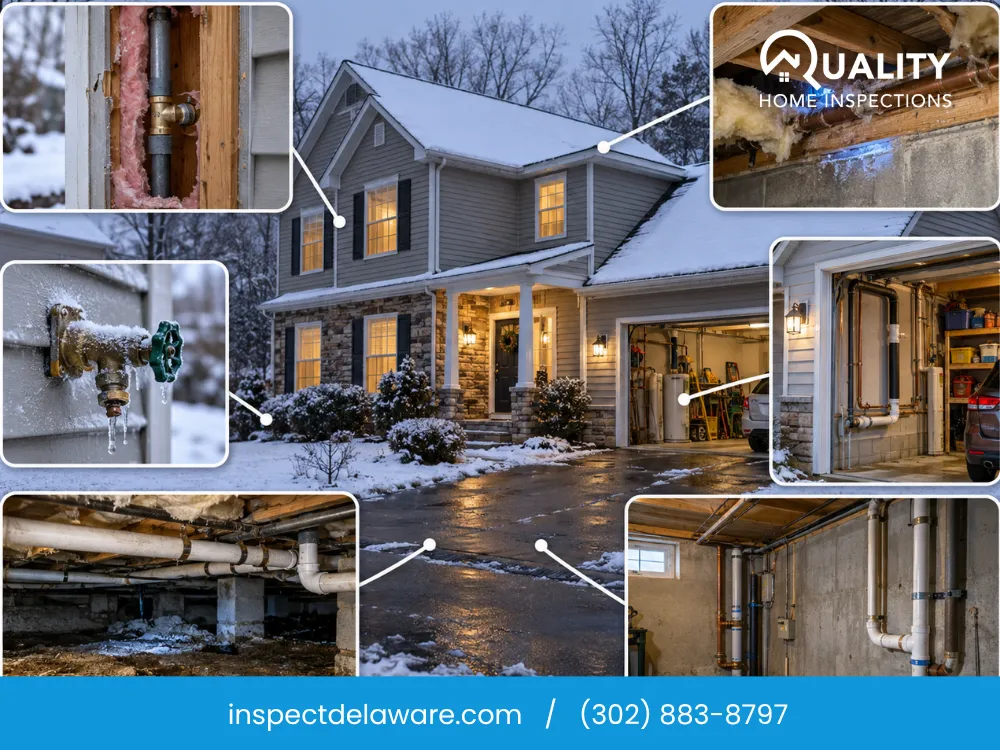
In Delaware homes, common areas of concern include:
Water supply lines running through exterior walls.
Plumbing installed inside unheated garages or crawl spaces.
Pipes located near gaps in basement rim joists.
Outdoor hose bibs with garden hoses still attached.
Supply lines serving additions or rooms above garages.
Plumbing beneath kitchen and bathroom sinks on exterior walls.
Cold outdoor air entering through unsealed openings can expose nearby plumbing to freezing conditions, even when the main living areas remain comfortable.
A pipe that has performed normally for years may become vulnerable when insulation shifts, air sealing deteriorates, or indoor heating is reduced during an extended cold spell.
Knowing where your home's plumbing runs is an important first step in preventing frozen pipes.
Where Are Middletown and Wilmington Homes Most Vulnerable to Frozen Pipes?
Homes throughout Middletown, Wilmington, Newark, and other Delaware communities vary in construction and plumbing layout. However, several locations consistently deserve attention before freezing temperatures arrive.
Exterior Hose Bibs and Outdoor Faucets
Outdoor hose bibs are among the first plumbing fixtures homeowners should prepare for winter.
When a garden hose stays connected, water can get trapped in the faucet assembly. As that water freezes and expands, it can split the fixture or connected piping.
Even frost-free outdoor faucets can be affected when hoses prevent proper drainage.
Before winter:
Disconnect garden hoses from outdoor faucets.
Locate the interior shutoff valve, if one is installed.
Close the interior valve.
Open the outdoor faucet to drain remaining water.
Follow the manufacturer's winterization instructions for the fixture.
Not every home has separate interior shutoff valves for outdoor faucets. If the correct procedure is unclear, a licensed plumber can explain how to winterize the installed system.
Basement Rim Joists and Sill Plates
The rim joist is the framing area where the floor structure meets the exterior perimeter of the home, often directly above the foundation wall.
In Delaware homes with basements, this area may allow cold air to enter when gaps are not adequately sealed.
Water supply lines running along or near the rim joist can be exposed to colder temperatures, particularly when insulation is missing, displaced, or insufficient.
During a visual home inspection, accessible basement areas can be reviewed for:
Gaps or openings along exterior framing.
Missing or displaced insulation.
Visible plumbing near rim joists.
Evidence of previous moisture exposure.
Areas that may benefit from further evaluation or maintenance.
Appropriate air sealing and insulation can help reduce cold-air exposure around nearby plumbing.
Crawl Spaces and Home Additions
Crawl spaces are another important consideration for winter plumbing maintenance in Delaware.
These areas may contain water supply lines beneath kitchens, bathrooms, laundry rooms, and other living spaces.
Some home additions also have plumbing installed above crawl spaces or concrete slabs, where heating conditions differ from those in the main house.
Homeowners should watch for exposed plumbing, disconnected insulation, and openings that let outdoor air circulate around water lines.
Accessible crawl-space vents should also be reviewed according to the home's intended ventilation design.
Because crawl spaces vary in construction and moisture-management requirements, evaluate insulation or ventilation changes for the specific property rather than assuming the same approach works for every home.
Garages and Bonus Rooms Above Garages
An attached garage may share walls with the home but remain substantially colder than the surrounding living spaces.
Water lines installed in garage walls, ceilings, or adjacent rooms may therefore receive less warmth during freezing weather.
Bathrooms above garages may also have plumbing close to unheated spaces.
Before winter, homeowners should identify whether water lines run through garage-adjacent areas and review any accessible insulation and air-sealing.
Laundry rooms positioned along exterior walls deserve similar attention.
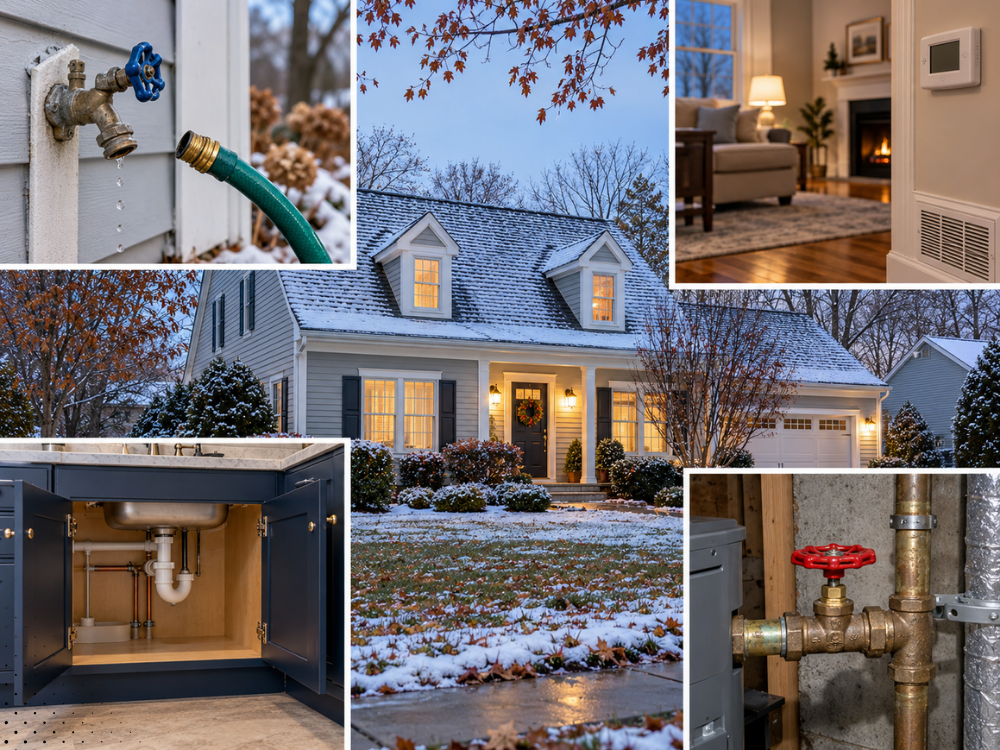
Kitchen and Bathroom Sinks on Exterior Walls
Pipes beneath sinks along exterior walls may become colder because closed cabinet doors limit the circulation of warm indoor air.
During particularly cold weather, opening cabinet doors can allow heated room air to reach the plumbing.
Homeowners should also maintain consistent indoor temperatures and check for noticeable drafts around accessible pipe openings.
If children or pets are present, keep household chemicals and other potentially hazardous materials securely stored while cabinet doors are open.
Older Homes in Wilmington and Newark
Older homes may have plumbing modified during multiple renovations.
Some properties have a combination of original plumbing, replacement materials, rerouted supply lines, and insulation installed at different times.
For example, a remodeled bathroom or kitchen may have plumbing routed through an exterior wall or another location with limited heating.
Older galvanized plumbing sections may also remain in certain properties.
A home maintenance inspection can help homeowners understand the visible plumbing layout and identify accessible areas that may need extra attention.
A home's age alone does not determine whether its pipes will freeze. Plumbing location, insulation, air leakage, and heating conditions are generally more useful considerations.
How Does Your Heating System Help Prevent Frozen Pipes?
Maintaining reliable indoor heating is one of the most important steps in preventing frozen plumbing.
When a heating system cannot maintain adequate temperatures, water lines in colder portions of the home may become more vulnerable.
Delaware homeowners should review their heating equipment before the first extended period of freezing weather.
Gas and Oil Furnaces and Boilers
Gas and oil heating systems should receive appropriate seasonal servicing from qualified professionals.
Homeowners with oil heating should also confirm that the tank contains sufficient fuel.
Visible tank conditions and accessible fuel supply lines may warrant professional evaluation if you notice corrosion, leakage, or other unusual conditions.
Heat Pumps and Backup Heating
Heat pumps operate differently from conventional furnaces and may use auxiliary or backup heating during colder weather.
Homeowners should understand how their installed system operates and whether the backup heating functions as intended.
A qualified HVAC contractor can properly test and service the system.
Hot-Water and Steam Heating Systems
Some older Delaware homes use boiler systems with radiators or baseboard heating.
These systems contain piping that may run through basements, exterior walls, or other colder locations.
Adequate heating and regular maintenance matter because freezing conditions can also affect water-filled heating components.
Smoke and Carbon Monoxide Alarms
The heating season is also a good reminder to review household smoke and carbon monoxide alarms.
Test installed alarms according to manufacturer instructions and confirm that they are appropriately maintained.
For additional information, review the U.S. Fire Administration's smoke alarm guidance.
How to Prevent Frozen Pipes Before Thanksgiving Travel
Thanksgiving falls in 2026. If you plan to travel, preparing your Delaware home before you leave can reduce the likelihood of returning to frozen plumbing.
Use this winter plumbing checklist before departure.
1. Keep Your Heating System Running
Do not turn off the heat while your home is unattended during freezing weather.
Maintain an indoor temperature appropriate for the property's plumbing layout and expected weather conditions.
A commonly recommended minimum is 55°F for some homes, but properties with plumbing in particularly cold locations may require a higher setting.
Confirm that the heating system has sufficient fuel or electrical power and that the thermostat operates properly.
2. Locate Your Main Water Shutoff Valve
Know where the main water shutoff valve is before an emergency.
Make sure the valve is accessible, and arrange professional help if you're unsure of its condition or how it works.
For longer trips, some homeowners choose to shut off the main water supply and drain plumbing lines.
Consult a licensed plumber about whether this approach is appropriate for your home's plumbing and heating systems.
3. Open Cabinets Along Exterior Walls
During particularly cold weather, open cabinet doors beneath sinks positioned against exterior walls.
This allows warmer indoor air to circulate around accessible plumbing.
4. Disconnect Outdoor Garden Hoses
Remove hoses from outdoor faucets and winterize the fixtures as directed.
Where applicable, close interior shutoff valves and drain the outdoor faucet.
5. Arrange for Someone to Check the House
If you will be away for several days, consider asking a trusted person to check the property.
Provide your contact information and explain where the main water shutoff valve is located.
6. Consider Temperature and Water-Leak Sensors
Water-leak sensors and smart thermostats can provide useful notifications when certain conditions occur.
Depending on the device, alerts may indicate unexpected moisture or falling indoor temperatures.
These devices supplement regular maintenance but do not replace proper plumbing winterization or adequate indoor heating.
Continue Your Winter Home Maintenance Checklist
Preventing frozen pipes is one part of preparing a Delaware home for colder weather. Heating equipment, insulation, electrical components, and household safety devices also deserve seasonal attention.
For more guidance, explore our end-of-year home maintenance tips, which cover key areas to review as the year ends.
What Does a Home Maintenance Inspection Check Before Winter?
A home maintenance inspection helps homeowners better understand the visible condition of their property, even when they are not preparing to buy or sell.
Rather than focusing on a real estate transaction, this inspection provides information on accessible systems and components that may need routine maintenance or further evaluation.
Quality Home Inspections serves homeowners in Wilmington, Middletown, Newark, Bear, New Castle, Dover, and surrounding Delaware communities.
A general home inspection may include accessible portions of the following systems:
Roof and attic.
Foundation and structural components.
Basement or crawl space.
Plumbing fixtures and visible supply lines.
Electrical service and panel.
Heating and cooling equipment.
Interior and exterior components.
For winter preparation, several areas are particularly relevant.
Accessible Plumbing and Supply Lines
An inspector can observe visible plumbing in basements, crawl spaces, garages, and other accessible locations.
This may include identifying exposed piping, visible moisture conditions, or areas where insulation or additional professional evaluation may be appropriate.
Insulation and Air Sealing
Accessible attic and basement areas can be reviewed for visible insulation conditions and openings that may allow unwanted air movement.
These observations can help homeowners determine whether maintenance or further evaluation is appropriate.
Heating Equipment
A home inspection may include a visual and operational review of accessible heating equipment within the scope of the inspection.
Qualified HVAC professionals should complete specialized servicing, combustion testing, and equipment repairs.
Outdoor Plumbing Fixtures
Accessible exterior faucets and visible plumbing connections can be observed for general condition.
The inspector may also identify locations where the homeowner should confirm appropriate winterization procedures.
Smoke and Carbon Monoxide Alarms
Installed alarms may be reviewed within the scope of the inspection, with recommendations for additional attention when appropriate.
Why Consider Regular Home Maintenance Inspections?
Winter preparation is one part of maintaining a residential property throughout the year.
Regular inspections can help homeowners better understand accessible plumbing, heating equipment, insulation, roofing, and other building components.
This information can be especially useful for aging properties, where systems may have been repaired, replaced, or modified over time.
For additional information about ongoing property care, read our guide to the benefits of home maintenance inspections.
What Are the Limits of a Home Inspection?
A home inspection visually evaluates accessible systems and components.
It does not involve opening finished walls, dismantling concealed plumbing, or performing destructive testing.
An inspector can document visible conditions but cannot guarantee that concealed pipes will not freeze during future weather events.
Inspection findings can help homeowners prioritize maintenance and decide when to consult a licensed plumber, HVAC contractor, or other qualified specialist.
Frequently Asked Questions About Frozen Pipes in Delaware
Which pipes are most likely to freeze in a Delaware home?
Water lines located in unheated or poorly insulated spaces are generally more vulnerable to freezing. Common examples include exterior hose bibs, pipes near basement rim joists, and supply lines running through crawl spaces, garages, or exterior walls.
Plumbing beneath sinks on exterior walls and water lines in certain home additions also deserve attention before winter temperatures arrive.
Should I turn off the heat when traveling during winter?
No. Keep the heating system running at a temperature suited to your home's plumbing layout and expected outdoor conditions.
Turning off the heat in freezing weather can expose water lines to temperatures low enough to form ice.
Before leaving, confirm that the heating equipment and thermostat are working and that you have enough fuel or power.
Can a frost-free outdoor faucet freeze if a hose is attached?
Yes. Frost-free faucets are designed to drain water away from the colder exterior portion of the fixture, but a connected hose can prevent proper drainage.
Trapped water may freeze and split the faucet assembly.
Disconnect hoses before freezing temperatures arrive and follow the manufacturer's winterization instructions.
How Can I Tell if a Water Pipe Has Frozen?
A faucet producing only a small trickle or no water during freezing weather may indicate a frozen supply line.
If you suspect freezing, locate the water shutoff and contact a licensed plumber for guidance.
Never use an open flame to thaw plumbing. If a pipe has split or water is leaking, shut off the water supply when safe to do so.
Can a Home Maintenance Inspection Help With Winter Preparation?
A home maintenance inspection can provide information about accessible plumbing, insulation, heating equipment, crawl spaces, and other residential components.
The inspection documents visible conditions and helps homeowners decide which maintenance items need attention.
It cannot predict every future plumbing issue or evaluate piping concealed behind finished surfaces.
Prepare Your Delaware Home Before Freezing Weather Arrives
Frozen-pipe prevention begins with practical steps: disconnect outdoor hoses, maintain indoor heating, identify exposed plumbing, and understand where cold air can reach water supply lines.
For homeowners in Wilmington, Middletown, Newark, and surrounding Delaware communities, November offers a chance to review these areas before winter temperatures become more consistent.
Quality Home Inspections offers professional residential inspection services, including its 5-Star Package, to help property owners understand accessible home systems and components.
To discuss inspection options or schedule an appointment, call (302) 883-8797 or schedule a home inspection with Quality Home Inspections.